We Use CookiesWe use cookies to enhance the security, performance, functionality and for analytical and promotional activities. By continuing to browse this site you are agreeing to our privacy policy

10 Best Thermal Cameras

From leading brands and best sellers available on the web.
By clicking on a link to a third party's website, log data is shared with that third party.

Our Top Picks

#1

Winner

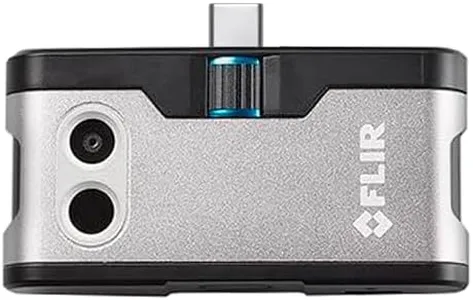
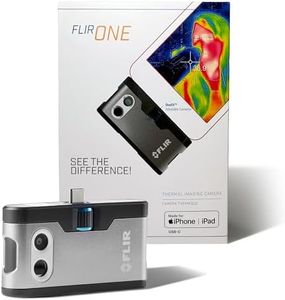
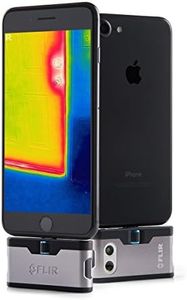
Flir One - Thermal Imaging Camera for Android Smartphones (USB-C), 240x180 Super Resolution (80x60 Native IR)

Rating
10.0
Chosen by1,482
Display and Connectivity
Thermal Sensitivity (NETD)
Display and Connectivity
Connecting the camera requires a specific sequence: launching the app before plugging in the device ensures it works smoothly with Android phones.
Thermal Sensitivity (NETD)
The camera’s sensitivity and performance make it a reliable tool for detecting cold, hot, and damp spots in houses before purchase or survey.

The Flir One thermal camera is a handy add-on for Android smartphones with USB-C ports, making it easy to turn your phone into a thermal imaging device. It offers an 80x60 native infrared resolution that’s upscaled to 240x180 using FLIR’s Super Resolution technology, which helps make thermal images clearer and more detailed than the base resolution suggests. MSX technology also overlays visible light details onto the thermal image, enhancing what you see in real time. The temperature measurement range (5 °C to 120 °C) covers most common uses, but the accuracy of ±3°C or ±5% means it’s better suited for general inspections rather than precise scientific measurements.

The device is ruggedly built to withstand drops from up to 1.5 meters, which is great for jobsite use or rough handling. It connects directly to your phone’s charging port, so you don’t need batteries besides your phone’s power, and the companion app provides helpful guides for tasks like finding air leaks or moisture. The camera captures 1080p video for visible light, which supports capturing detailed visual footage alongside thermal imaging.

This makes the Flir One a practical tool for homeowners, DIYers, and professionals needing a quick, portable thermal imaging solution integrated with their smartphone, though it may not satisfy users needing highly detailed or precise thermal data.

Rating
10.0
Chosen by1,482
Display and Connectivity
Thermal Sensitivity (NETD)
Display and Connectivity
Connecting the camera requires a specific sequence: launching the app before plugging in the device ensures it works smoothly with Android phones.
Thermal Sensitivity (NETD)
The camera’s sensitivity and performance make it a reliable tool for detecting cold, hot, and damp spots in houses before purchase or survey.
#2

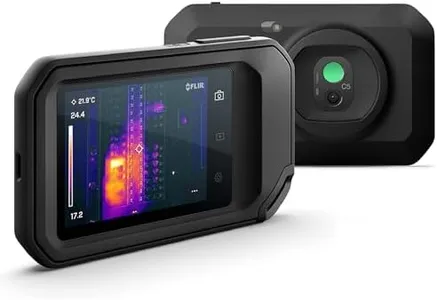
FLIR C5 Compact Thermal Imaging Camera with Wifi: High Resolution Infrared Imager for Inspection, Electrical/Mechanical, Building, and HVAC Applications

Rating
9.7
Resolution
Display and Connectivity
Resolution
Some users feel the 160x120 IR sensor could be better for the price, as there are higher resolution options available.
Display and Connectivity
Good size display that's easy to set up and use.

The FLIR C5 Compact Thermal Imaging Camera is a versatile tool designed for inspection, electrical/mechanical, building, and HVAC applications. With a resolution of 160 x 120 pixels (19,200 pixels), it offers decent image clarity for identifying and troubleshooting hidden faults. The camera typically provides accurate temperature readings ranging from -20 to 400°C (-4 to 752°F), making it suitable for a wide range of applications.

The device supports direct image upload via WiFi to the FLIR Ignite cloud, allowing for easy documentation and sharing of results. The patented MSX technology enhances the thermal images by embossing visual details, creating sharper and more understandable pictures. The camera is lightweight and compact, with a battery life of around 4 hours, making it convenient for prolonged use.

It comes with a robust warranty, offering 2 years coverage on parts and labor, and 10 years on the detector. This thermal camera is ideal for professionals in building inspection, HVAC, and electrical/mechanical fields needing a reliable and easy-to-use tool for diagnostics and reporting. Its connectivity features and warranty are significant strengths.

Rating
9.7
Resolution
Display and Connectivity
Resolution
Some users feel the 160x120 IR sensor could be better for the price, as there are higher resolution options available.
Display and Connectivity
Good size display that's easy to set up and use.
#3

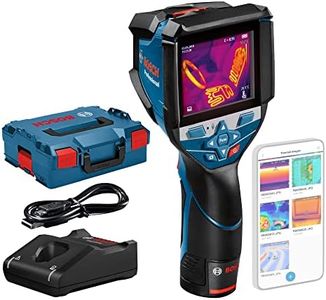
Bosch Professional 12V System Thermal Camera GTC 600 C (1x 12V Battery, w/app Function, Temperature Range: -20°C to +600°C, Resolution: 256 x 192px, in L-Boxx)

Rating
9.1
Resolution
Thermal Sensitivity (NETD)
Temperature Range
Resolution
Produces a picture purely from the heat emissivity of an object, displayed in various color spectrums.
Thermal Sensitivity (NETD)
The camera constantly measures the temperature of every pixel separately, displaying each as a color based on its temperature.
Temperature Range
Manual mode allows changing hot and cold limits, determining what will show up thermally.
Display and Connectivity
Built-in WiFi hotspot and Bosch Master Measuring app ensure seamless image transfer to your phone.

The Bosch Professional 12V System Thermal Camera GTC 600 C is a solid choice for professionals seeking a reliable thermal imaging tool. Its resolution of 256 x 192 pixels provides decent image quality, which is particularly useful for detecting temperature differences. The thermal sensitivity (NETD) of ≤50 mK ensures that even subtle temperature variations are captured, making it ideal for detailed inspections.

One of the standout features of this camera is its impressive temperature range, from -20°C to +600°C, allowing for versatile applications both indoors and outdoors. The robust design, featuring a shock-absorbing rubber cage and an IP54 rating, ensures durability and protection against dust and water, making it suitable for harsh working environments.

Connectivity is a strong suit of the GTC 600 C, with the ability to transfer images to a mobile device using the Bosch Thermal App. This feature, along with PC software for image editing and report generation, adds value for users needing to analyze and share results. The package includes a 12V battery, charger, USB-C cable, and L-BOXX, offering good value. Weighing 469 grams, the camera is portable, although not the lightest option. This thermal camera is best suited for professionals in construction, maintenance, and similar fields who need a reliable and durable imaging tool with convenient connectivity options.

Rating
9.1
Resolution
Thermal Sensitivity (NETD)
Temperature Range
Resolution
Produces a picture purely from the heat emissivity of an object, displayed in various color spectrums.
Thermal Sensitivity (NETD)
The camera constantly measures the temperature of every pixel separately, displaying each as a color based on its temperature.
Temperature Range
Manual mode allows changing hot and cold limits, determining what will show up thermally.
Display and Connectivity
Built-in WiFi hotspot and Bosch Master Measuring app ensure seamless image transfer to your phone.

Buying Guide for the Best Thermal Cameras

When choosing a thermal camera, it's important to understand that these devices are used to detect heat and create images based on temperature differences. They are widely used in various fields such as building inspections, electrical maintenance, and even wildlife observation. The key to selecting the right thermal camera is to consider the specific needs of your application, as different models offer varying features and capabilities. Understanding the key specifications will help you make an informed decision that best suits your requirements.
ResolutionResolution in thermal cameras refers to the number of pixels in the thermal image. A higher resolution means more pixels, which results in a clearer and more detailed image. This is important because it allows you to see finer details and detect smaller temperature differences. Resolutions can range from low (80x60 pixels) to high (640x480 pixels or more). If you need to inspect small components or require detailed images, opt for a higher resolution. For general use or larger targets, a lower resolution may suffice.
Thermal Sensitivity (NETD)Thermal sensitivity, also known as Noise Equivalent Temperature Difference (NETD), measures the smallest temperature difference a camera can detect. It is expressed in millikelvins (mK). A lower NETD value indicates higher sensitivity, meaning the camera can detect smaller temperature differences. This is crucial for applications requiring precise temperature measurements, such as electrical inspections or research. If your work involves detecting subtle temperature changes, choose a camera with a lower NETD. For less demanding tasks, a higher NETD might be adequate.
Temperature RangeThe temperature range of a thermal camera indicates the minimum and maximum temperatures it can accurately measure. This is important because it determines the suitability of the camera for different environments and applications. Temperature ranges can vary widely, from -20°C to 150°C for basic models, up to 2000°C or more for advanced models. Consider the typical temperature range of your application. For example, if you're inspecting industrial equipment, you might need a camera with a higher maximum temperature range.
Field of View (FOV)Field of View (FOV) refers to the extent of the observable area the camera can capture at any given moment. A wider FOV allows you to see more of the scene, which is useful for scanning large areas quickly. Conversely, a narrower FOV provides more detail on a smaller area, which is beneficial for close-up inspections. Choose a FOV based on your typical use case: a wide FOV for large area surveys or a narrow FOV for detailed inspections of specific components.
Image FrequencyImage frequency, or refresh rate, is the number of times per second the camera updates the thermal image. It is measured in hertz (Hz). A higher refresh rate provides smoother motion and is important for capturing fast-moving objects or for applications where real-time analysis is critical. Common refresh rates are 9Hz, 30Hz, and 60Hz. If your work involves dynamic scenes or moving targets, opt for a higher refresh rate. For static inspections, a lower refresh rate may be sufficient.
Display and ConnectivityThe display and connectivity options of a thermal camera determine how you view and share the thermal images. Some cameras have built-in displays, while others connect to external devices like smartphones or tablets. Connectivity options may include Wi-Fi, Bluetooth, or USB. Consider how you plan to use the camera: if you need to share images quickly or work in the field, look for models with robust connectivity features. If you prefer analyzing images on a larger screen, ensure the camera can easily connect to your preferred device.