We Use CookiesWe use cookies to enhance the security, performance, functionality and for analytical and promotional activities. By continuing to browse this site you are agreeing to our privacy policy

10 Best Cameras

From leading brands and best sellers available on the web.
By clicking on a link to a third party's website, log data is shared with that third party.
#5
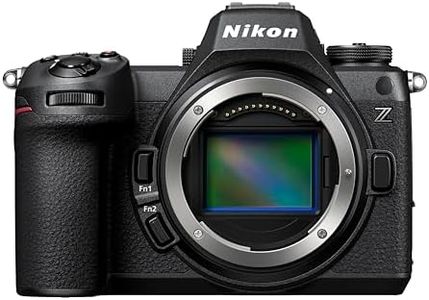
Nikon Z6II

Our Top Picks

#1

Winner

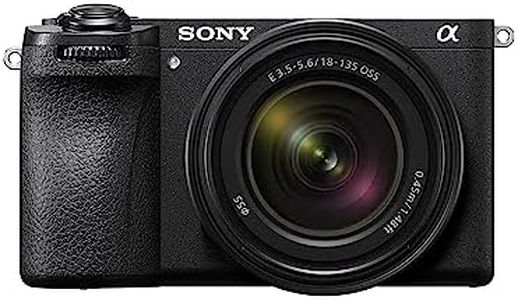
Sony Alpha 6700 APS-C Mirrorless Camera with 18-135mm Lens (26MP, AI-Powered Autofocus, 4K 120p Video, 5-Axis Image Stabilization, Vari-Angle Touchscreen – Hybrid Camera for Photo & Video Creators)

Rating
10.0
Chosen by1,489
Sensor Size
Lens Options
Autofocus System
Sensor Size
Handles low light remarkably well with improved ISO performance compared to previous models.
Lens Options
Lightweight and compact design paired with a versatile lens lineup makes it ideal for travel and everyday use.
Autofocus System
Industry-leading autofocus with Real-Time Eye AF for humans and animals that ensures sharp focus in nearly any situation.
Video Capabilities
Excels in video with 4K recording at 60fps and 10-bit 4:2:2 internal recording, providing flexibility for creative color grading.
Battery Life
Battery life supports a full day of shooting, with convenient USB-C charging for on-the-go power top-ups.
Build Quality and Weather Sealing
Compact and robust body offers a comfortable grip and intuitive controls, including a useful front wheel and fully articulating touchscreen.

The Sony Alpha 6700 is a compact APS-C mirrorless camera offering a solid 26-megapixel Exmor R sensor that delivers detailed, sharp images suitable for both everyday photography and creative projects. It comes as a kit with the versatile Sony 18-135mm lens, covering wide to telephoto shots, which is great for users wanting flexibility without buying multiple lenses. The camera supports a broad ISO range up to 102,400, helping you shoot in low light though noise can increase at very high ISOs.

Autofocus is a real highlight here, featuring 399 hybrid points and AI-powered tracking that smoothly follows moving subjects, making it easier to capture sharp photos and videos. Video capabilities are advanced, with 4K recording downsampled from 6K, slow-motion up to 120fps, and professional features like S-Log3 profile and active stabilization, useful for vloggers or filmmakers on the move. Battery life is decent for mirrorless cameras, powered by a reliable lithium-ion battery.

The build is rugged with dust and moisture resistance and a magnesium alloy body, so it can handle outdoor adventures. Some minor drawbacks include digital rather than optical image stabilization in the kit lens and the absence of a USB-C cable in the package, which might be inconvenient. The camera’s price and learning curve might be more than casual users need. The Sony Alpha 6700 suits enthusiasts and creators who want a lightweight but powerful camera that performs well in stills and video, especially for those who value cutting-edge autofocus and solid build quality.

Rating
10.0
Chosen by1,489
Sensor Size
Lens Options
Autofocus System
Sensor Size
Handles low light remarkably well with improved ISO performance compared to previous models.
Lens Options
Lightweight and compact design paired with a versatile lens lineup makes it ideal for travel and everyday use.
Autofocus System
Industry-leading autofocus with Real-Time Eye AF for humans and animals that ensures sharp focus in nearly any situation.
Video Capabilities
Excels in video with 4K recording at 60fps and 10-bit 4:2:2 internal recording, providing flexibility for creative color grading.
Battery Life
Battery life supports a full day of shooting, with convenient USB-C charging for on-the-go power top-ups.
Build Quality and Weather Sealing
Compact and robust body offers a comfortable grip and intuitive controls, including a useful front wheel and fully articulating touchscreen.
#2

Nikon Z8 Digital Mirrorless Camera Body

The Nikon Z8 is a professional-level mirrorless camera that offers a high-resolution 45.7-megapixel full-frame sensor, capturing very detailed and sharp images ideal for serious photographers. Its dual image stabilization reduces blur, making it easier to shoot in low light or at slow shutter speeds. The autofocus system includes 493 points, providing fast and precise focus, which is great for action or wildlife photography. The ISO range of 64-25600 allows for solid performance in various lighting conditions, although it may be less suitable for extreme low-light work compared to cameras with higher ISO capabilities.

Video capabilities are notable with support for 5.5K resolution video, making it suitable for high-quality video projects. Continuous shooting at up to 120 frames per second is impressive for capturing fast action. The camera uses interchangeable Nikon Z mount lenses, so lens choice depends on what is purchased separately since it lacks built-in lens zoom.

Battery life aligns with typical mirrorless cameras and it includes a rechargeable lithium-ion battery. The build is compact yet robust, though it is not weather-sealed or water-resistant, which may be a limitation for outdoor or harsh environments. Connectivity via Wi-Fi facilitates easy file transfer and remote control. Weighing just over 900 grams, it is portable for its class. This model is well-suited for professional photographers and advanced enthusiasts seeking high resolution and video quality in a compact system, while it may not be ideal for those requiring weatherproofing or extended low-light sensitivity.

#3

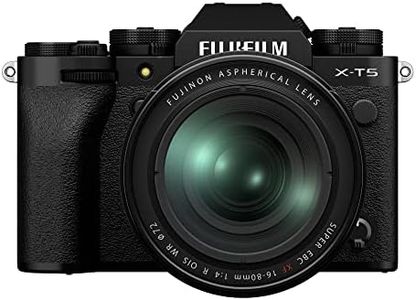
FUJIFILM X-T5 Black with XF16-80mm Lens Kit

Rating
9.1
Sensor Size
Lens Options
Autofocus System
Sensor Size
The camera delivers stunning image quality that truly impresses right from the first use.
Lens Options
The included zoom lens covers a versatile range, making it ideal for everyday shooting and travel.
Autofocus System
The autofocus system generally performs well but can sometimes lag in challenging lighting or fast action.
Video Capabilities
Video capabilities are strong, supporting 4K at 60fps for high-quality footage.
Battery Life
Battery life is average, so carrying a spare battery is advisable for longer sessions.
Build Quality and Weather Sealing
Build quality is solid with some weather resistance, though extra protection is recommended for harsh conditions.

The Fujifilm X-T5 with the XF16-80mm lens is a versatile mirrorless camera that stands out with its large 40.2 MP APS-C sensor, delivering detailed and sharp images suitable for enthusiasts and creative photographers. The included 16-80mm lens offers a useful zoom range, covering wide-angle to short telephoto, which is great for everyday shooting and travel. Its autofocus system is quite advanced with 680 points, helping to capture sharp photos even with moving subjects. The ISO range is broad, up to 51200, allowing decent performance in low light, although noise may increase at the highest settings.

Video capabilities are strong, offering 4K recording at 60 frames per second, making it a good choice if you want quality video as well. The camera body features a 3-inch tilting touchscreen, which is handy for composing shots from different angles. Image stabilization in the lens helps reduce blur from hand shake, enhancing photo and video stability. Battery life is average for mirrorless cameras, so carrying a spare might be wise for longer shoots.

Build quality is solid with some weather resistance, but if you plan to shoot in severe conditions, extra protection is recommended. One minor downside is its weight; at nearly 1 kg with the lens, it’s not the lightest option if you prefer a compact setup. Some users have noted the autofocus can occasionally lag in tricky lighting or fast action. The Fujifilm X-T5 kit offers excellent image quality, versatile zoom, and strong video features, making it a great all-rounder for photographers who want a high-resolution camera with good handling and creative options.

Rating
9.1
Sensor Size
Lens Options
Autofocus System
Sensor Size
The camera delivers stunning image quality that truly impresses right from the first use.
Lens Options
The included zoom lens covers a versatile range, making it ideal for everyday shooting and travel.
Autofocus System
The autofocus system generally performs well but can sometimes lag in challenging lighting or fast action.
Video Capabilities
Video capabilities are strong, supporting 4K at 60fps for high-quality footage.
Battery Life
Battery life is average, so carrying a spare battery is advisable for longer sessions.
Build Quality and Weather Sealing
Build quality is solid with some weather resistance, though extra protection is recommended for harsh conditions.

Buying Guide for the Best Cameras

Choosing the right camera can be a rewarding experience, as it allows you to capture moments and express your creativity. The key to finding the best camera for you is to understand your needs and how different specifications can meet those needs. Whether you're a beginner looking to explore photography or a professional seeking advanced features, knowing what to look for will help you make an informed decision.
Sensor SizeThe sensor size in a camera is crucial because it affects the image quality, depth of field, and low-light performance. Larger sensors, like full-frame or APS-C, generally provide better image quality and perform well in low-light conditions, making them ideal for professional photographers or enthusiasts who prioritize image quality. Smaller sensors, like those in compact cameras or smartphones, are more portable and can be sufficient for casual photography or travel. Consider what you value more: image quality or portability, and choose a sensor size that aligns with your priorities.
MegapixelsMegapixels refer to the resolution of the camera's sensor, indicating how many millions of pixels the camera can capture. While more megapixels can mean more detail, especially for large prints or cropping, they are not the sole determinant of image quality. For most users, a camera with 12-24 megapixels is sufficient for everyday photography and sharing online. If you plan to print large photos or need to crop images significantly, you might want a camera with higher megapixels. However, remember that other factors like sensor size and lens quality also play a significant role in the final image quality.
Lens OptionsThe lens is a critical component of a camera, affecting the sharpness, depth of field, and overall look of your photos. Interchangeable lens cameras, like DSLRs and mirrorless models, offer flexibility to choose lenses that suit different photography styles, from wide-angle landscapes to telephoto wildlife shots. Fixed lens cameras, such as compacts or bridge cameras, are more convenient and often more affordable, making them suitable for beginners or those who prefer simplicity. Consider what types of photography you are interested in and whether you want the flexibility to change lenses or prefer the convenience of a fixed lens.
ISO RangeISO range determines a camera's sensitivity to light, affecting its performance in different lighting conditions. A wider ISO range allows for better performance in low-light situations, reducing the need for a flash and minimizing noise in the image. Cameras with a high ISO range are beneficial for indoor or night photography. If you often shoot in varied lighting conditions, look for a camera with a broad ISO range. However, if you mostly shoot in well-lit environments, a standard ISO range will suffice.
Autofocus SystemThe autofocus system in a camera determines how quickly and accurately it can focus on a subject. A fast and reliable autofocus system is essential for capturing sharp images, especially in action or sports photography. Cameras with advanced autofocus systems, featuring multiple focus points and tracking capabilities, are ideal for dynamic subjects. For general photography, a basic autofocus system with fewer focus points may be adequate. Consider the types of subjects you plan to photograph and choose a camera with an autofocus system that meets those needs.
Video CapabilitiesVideo capabilities are important if you plan to use your camera for recording videos as well as taking photos. Look for features like resolution (e.g., 4K or Full HD), frame rates, and additional options like slow motion or time-lapse. Higher resolution and frame rates provide better video quality and smoother motion, which is beneficial for professional videography or content creation. If video is a secondary concern, a camera with basic video features may be sufficient. Consider how much emphasis you want to place on video recording when choosing a camera.
Battery LifeBattery life is an important consideration, especially if you plan to use your camera for extended periods or in situations where recharging is not convenient. Cameras with longer battery life are advantageous for travel, events, or outdoor photography. Mirrorless cameras often have shorter battery life compared to DSLRs due to their electronic viewfinders. If you frequently shoot for long durations, consider a camera with a robust battery life or the option to carry spare batteries. For casual use, a standard battery life may be sufficient.
Build Quality and Weather SealingBuild quality and weather sealing are important for durability and protection against the elements. Cameras with robust build quality and weather sealing are ideal for outdoor or adventure photography, as they can withstand harsh conditions like rain, dust, or extreme temperatures. If you plan to use your camera in challenging environments, look for models with these features. For indoor or casual use, a standard build quality without weather sealing may be adequate. Consider where and how you plan to use your camera when evaluating these aspects.