We Use CookiesWe use cookies to enhance the security, performance, functionality and for analytical and promotional activities. By continuing to browse this site you are agreeing to our privacy policy

10 Best Tig Welders

From leading brands and best sellers available on the web.
By clicking on a link to a third party's website, log data is shared with that third party.

Our Top Picks

#1

Winner

ESAB EMP 210 Multi Process Welder MIG/Stick/TIG, 200A, 120/230V DC

Rating
10.0
Chosen by1,290
Portability
Portability
The welder is light and mobile, making it ideal for on-the-go tasks.

The ESAB EMP 210 Multi Process Welder offers versatility by enabling MIG, Stick, and Lift TIG welding, making it suitable for various welding tasks. With an amperage range of 10-200A, it provides flexibility, particularly for TIG applications where low amperage is needed for precise control. It operates on DC only, which limits some applications that require AC capability.

A major strength of this welder is its portability, weighing only 29 pounds, which makes it easy to transport and ideal for mobile jobs. The digital control system paired with a large LED display enhances usability, allowing for fast and accurate adjustments. This feature is particularly beneficial for those who are not experienced in welding, as it simplifies the operation.

The package includes a variety of useful accessories such as a MIG gun with consumables and a TIG torch, which adds value by reducing the need for additional purchases. However, it lacks a foot pedal control, which could offer more precise amperage regulation during TIG welding. With a three-year warranty and a satisfaction guarantee, users can feel confident in their investment. For those mainly focused on TIG welding, it’s a solid option but may fall short for more demanding AC-required tasks.

Rating
10.0
Chosen by1,290
Portability
Portability
The welder is light and mobile, making it ideal for on-the-go tasks.
#2

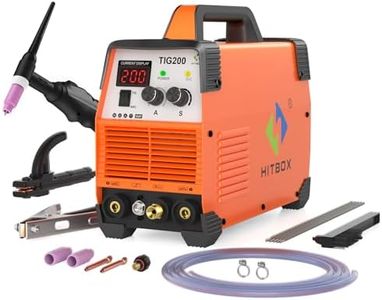
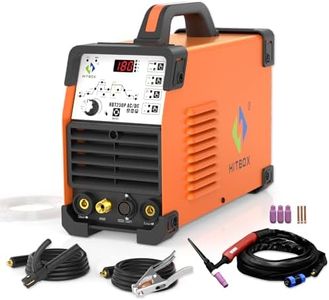
HITBOX 200A Aluminium TIG Welder AC/DC, Digital Inverter TIG Welding Machine with Pulse & Square Wave, Professional TIG Welder (HBT250P AC/DC)

The HITBOX 200AMP TIG Welder offers a versatile welding solution with its 4-in-1 capability, accommodating both AC and DC pulse welding. This flexibility makes it suitable for steel and aluminum, addressing the need for a wide amperage range and AC/DC capability. Its digital inverter allows precise control over various parameters such as pulse frequency, duty cycle, and gas flow, which is beneficial for detailed work on ultra-thin materials like 0.3mm aluminum plates. This precision is vital for applications in automotive repair, home DIY, and metalworking projects.

The welder is equipped with high-frequency start and provisions for foot pedal control, although the pedal is not included, which might be a slight inconvenience for those relying on remote control functionality. Portability is decent with a weight of 11 kg, making it manageable but not the lightest option available, which might be a consideration for those frequently on the move. The cooling system is highlighted as dual and high-performance, reducing risk of overheating during extended use. The product’s sound level is rated at 52 dB, which is relatively quiet and suitable for indoor environments.

The manufacturer's prompt customer service and recent updates like standard compliant fuses add to reliability and peace of mind. The machine ranks well in its category, being well-suited for those engaged in detailed and varied welding tasks rather than heavy-duty industrial applications.

#3

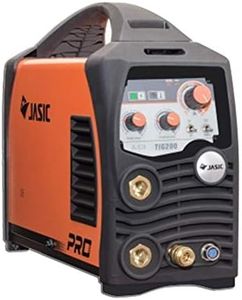
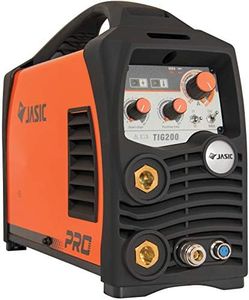
Jasic Tig 200 AC/DC Digital Welding Package

Rating
8.8
Foot Pedal Control
Foot Pedal Control
The inclusion of a foot pedal enhances control, providing a professional feel even for hobbyists.

The Jasic Tig 200 AC/DC Digital Welding Package is a solid choice for those looking for a versatile TIG welder, especially if you want the ability to weld both aluminium (using AC) and steel or stainless steel (using DC). It features digital controls with a clear display, making it easier to adjust settings like pulse frequency and pulse duty for smoother and more stable welding performance. The inclusion of pulse welding is a plus when working on delicate or thin materials. The unit runs on 240 volts and supports AC/DC power, which is essential for a wide range of welding tasks.

The 5-year back-to-base warranty is reassuring, showing confidence in the product's durability. This welder is suitable for hobbyists or light professional users who want a reliable AC/DC TIG welder with digital features. If you require detailed control accessories like foot pedals or specifics about duty cycle for heavy-duty use, you might want to explore additional options.

Rating
8.8
Foot Pedal Control
Foot Pedal Control
The inclusion of a foot pedal enhances control, providing a professional feel even for hobbyists.

Buying Guide for the Best Tig Welders

Choosing the right TIG welder can be a daunting task, especially if you're new to welding or looking to upgrade your equipment. TIG welding, or Tungsten Inert Gas welding, is known for its precision and ability to weld thin materials. To make an informed decision, it's important to understand the key specifications and how they relate to your specific needs. Here are the main specs to consider when selecting a TIG welder.
Amperage RangeAmperage range refers to the range of electrical current the welder can produce. This is crucial because different materials and thicknesses require different amperage levels. For thin materials like aluminum or stainless steel, a lower amperage (around 5-20 amps) is ideal, while thicker materials like steel may require higher amperage (up to 200 amps or more). Consider the types of projects you'll be working on and choose a welder with an amperage range that suits those needs.
AC/DC CapabilityAC/DC capability indicates whether the welder can operate on alternating current (AC) or direct current (DC). AC is typically used for welding aluminum, while DC is used for welding steel and stainless steel. If you plan to work with a variety of metals, a welder with both AC and DC capabilities will offer greater versatility. Assess the types of materials you'll be welding to determine if you need a welder with both AC and DC options.
Duty CycleThe duty cycle is the amount of time a welder can operate continuously before needing to cool down. It is usually expressed as a percentage over a 10-minute period. For example, a 60% duty cycle at 100 amps means the welder can run for 6 minutes at 100 amps before requiring a 4-minute rest. If you plan on doing long welding sessions, a higher duty cycle is beneficial. Consider the length and intensity of your welding projects to choose a welder with an appropriate duty cycle.
PortabilityPortability refers to the ease with which you can move the welder around. This is important if you need to transport your welder to different job sites or if you have limited space in your workshop. Portable welders are typically lighter and more compact, but may have fewer features compared to larger, stationary models. Think about where you'll be using the welder and how often you'll need to move it to determine the right level of portability for you.
Foot Pedal ControlFoot pedal control allows you to adjust the amperage while welding, giving you greater precision and control over the weld. This is particularly useful for intricate work and when welding thin materials. If you need fine control over your welding process, look for a welder that includes or is compatible with a foot pedal. Consider the complexity of your projects and whether this feature will enhance your welding experience.
High-Frequency StartHigh-frequency start is a feature that helps initiate the arc without the need for physical contact between the tungsten electrode and the workpiece. This results in cleaner starts and reduces contamination of the weld. If you require precise and clean welds, especially on delicate materials, a high-frequency start is beneficial. Evaluate the quality and precision required for your projects to decide if this feature is necessary.
Cooling SystemThe cooling system in a TIG welder helps prevent overheating and prolongs the life of the machine. Welders can have air-cooled or water-cooled systems. Water-cooled systems are more efficient and suitable for high-amperage, long-duration welding, while air-cooled systems are simpler and adequate for lower-amperage, shorter-duration tasks. Consider the intensity and duration of your welding projects to choose the appropriate cooling system.