We Use CookiesWe use cookies to enhance the security, performance, functionality and for analytical and promotional activities. By continuing to browse this site you are agreeing to our privacy policy

10 Best Cameras For Beginners

From leading brands and best sellers available on the web.
By clicking on a link to a third party's website, log data is shared with that third party.

Our Top Picks

#1

Winner

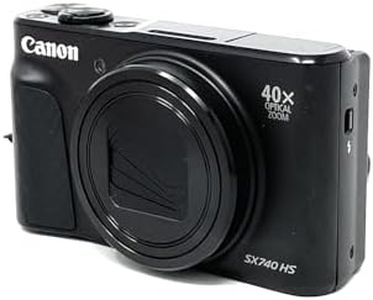
Canon SX740 HS PowerShot - Black

Rating
10.0
Chosen by1,112
Sensor Size
Lens Options
Ease of Use
Sensor Size
The vibrant colors and sharp images rival many low to mid-range DSLRs, offering excellent photo quality for a compact model.
Lens Options
The 40x optical zoom delivers spectacular clarity and remarkable detail, making distant subjects appear close and vivid.
Ease of Use
This camera strikes a perfect balance between powerful zoom and compact portability, fitting easily in a pocket for everyday use.
Video Capabilities
4K video recording and smooth full HD movie modes provide impressive video performance for a camera in this category.

The Canon SX740 HS PowerShot is a solid choice for beginners looking for a compact and easy-to-use camera. It features a 20.3-megapixel CMOS sensor that provides good image quality for everyday photography. With a versatile 40x optical zoom lens, you can effortlessly capture a wide range of scenes—from wide landscapes to detailed close-ups or distant subjects, which is great for hobbyists exploring different photography styles.

The camera is lightweight and pocket-friendly, making it convenient to carry around, and its 3-inch flip-up screen helps when taking selfies or shooting from tricky angles. Video performance is impressive for this category, offering 4K recording and continuous shooting at up to 10 frames per second, which is helpful if you want to capture action or smooth video clips. Connectivity options like Wi-Fi and Bluetooth work well for wirelessly transferring photos to your phone or remotely controlling the camera, so sharing your shots is simple.

The camera’s maximum ISO of 3200 and aperture range (f/3.3 to f/6.9) may limit low-light performance and depth-of-field control compared to more advanced models. It also lacks weather sealing, so it’s best used in dry conditions. While it doesn’t support interchangeable lenses, the built-in zoom lens covers many typical needs for beginners without extra cost or complexity. For those seeking a straightforward point-and-shoot with good zoom, solid image quality, and beginner-friendly features, the Canon SX740 HS is a dependable option.

Rating
10.0
Chosen by1,112
Sensor Size
Lens Options
Ease of Use
Sensor Size
The vibrant colors and sharp images rival many low to mid-range DSLRs, offering excellent photo quality for a compact model.
Lens Options
The 40x optical zoom delivers spectacular clarity and remarkable detail, making distant subjects appear close and vivid.
Ease of Use
This camera strikes a perfect balance between powerful zoom and compact portability, fitting easily in a pocket for everyday use.
Video Capabilities
4K video recording and smooth full HD movie modes provide impressive video performance for a camera in this category.
#2

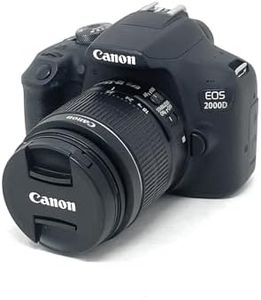
Canon EOS 2000D DSLR Camera and EF-S 18-55 mm f/3.5-5.6 IS II Lens - Black

Rating
10.0
Sensor Size
Lens Options
Ease of Use
Sensor Size
The APS-C sensor is capable of producing prints at a large format, making it ideal for home decoration with personal photography.
Lens Options
The camera's versatility is enhanced with interchangeable lenses, with a recommendation to start with the 'nifty-fifty' EF 50mm f/1.8 STM for improved low-light performance.
Ease of Use
Scene Intelligent Auto PLUS mode impressively simplifies shooting for beginners, delivering excellent results with minimal effort.
Connectivity
The camera supports seamless wireless connectivity, allowing users to control it remotely and easily back up photos.

The Canon EOS 2000D DSLR is a solid choice for beginner photographers looking to explore the world of DSLR cameras. Featuring a 24.1 megapixel APS-C CMOS sensor, it captures sharp and detailed images, making it suitable for both photography and video shooting. The bundled EF-S 18-55mm f/3.5-5.6 IS II lens offers decent versatility for a variety of shooting conditions, with optical image stabilization aiding in reducing blur from camera shake.

Ease of use is a strong point for this model. It includes user-friendly features and guidance to help newcomers understand and utilize its functions effectively, making it easier for beginners to capture impressive photos with background blur. The camera supports automatic and manual aperture modes, allowing users to gradually explore more complex settings as they grow in confidence.

Connectivity is facilitated by built-in Wi-Fi, which enables easy sharing of photos and movies on social media or directly to other devices, enhancing convenience for users who enjoy shooting and sharing on the go. While the EOS 2000D provides competent video recording capabilities, it is limited to Full HD rather than 4K, which might be a drawback for those interested in more advanced video production. Moreover, the camera lacks water resistance, which necessitates caution in adverse weather conditions.

In conclusion, the Canon EOS 2000D offers a balanced mix of features suited for beginners, providing both the tools for easy photography and the potential for creative exploration with interchangeable lenses. Its popularity, evidenced by positive customer reviews, highlights its effectiveness as a starter camera, though users seeking high-end video capabilities might need to look elsewhere.

Rating
10.0
Sensor Size
Lens Options
Ease of Use
Sensor Size
The APS-C sensor is capable of producing prints at a large format, making it ideal for home decoration with personal photography.
Lens Options
The camera's versatility is enhanced with interchangeable lenses, with a recommendation to start with the 'nifty-fifty' EF 50mm f/1.8 STM for improved low-light performance.
Ease of Use
Scene Intelligent Auto PLUS mode impressively simplifies shooting for beginners, delivering excellent results with minimal effort.
Connectivity
The camera supports seamless wireless connectivity, allowing users to control it remotely and easily back up photos.
#3

Panasonic Lumix DC-FZ82DE-K Bridge Camera with 20-1200 mm F2.8-5.9 Lens, 18.1MP, 4K Video & Photo, OLED Live View Finder, LCD Touch Screen, USB-C, Black

Rating
9.4
Connectivity
Connectivity
Frustration arose due to the lack of an included charging and uploading cable, highlighting a need for better accessory information.

The Panasonic Lumix DC-FZ82DE-K Bridge Camera is an appealing option for beginners looking to explore photography without a steep learning curve. Its 18.1MP MOS sensor delivers good image quality, suitable for capturing everyday moments with clarity. The standout feature is the 60x optical zoom lens, covering a vast focal range from wide landscapes to detailed close-ups, which is particularly useful for beginners who want to experiment with different types of photography without investing in multiple lenses. Its varied lens capabilities, including a macro function, add to its versatility.

For those interested in video, the camera supports 4K video recording, which is a notable point for those who want detailed and high-resolution video content. Additionally, the 4K Photo feature allows users to capture fast action moments and extract high-resolution images from video footage, making it easy to capture fleeting moments.

The camera boasts a user-friendly interface with a 1840k-dot touch LCD screen and an OLED Live View Finder, which helps users compose shots easily even in bright conditions. USB-C charging is a convenient feature, allowing users to charge the camera from various devices, which is beneficial for travel.

However, the camera's sensor size, while decent for beginners, may limit performance in low-light conditions compared to cameras with larger sensors. The camera is not water-resistant, which means users need to be cautious in challenging weather. Weighing 640 grams, it might be slightly bulky for those looking for a lightweight option.

With a customer rating of 4.1 out of 5 stars, the camera has received positive feedback, suggesting it is well-received among users. In conclusion, the Panasonic Lumix DC-FZ82DE-K provides a solid set of features for beginners, offering excellent zoom capability, ease of use, and good video quality, though it may have some limitations in low-light performance and portability.

Rating
9.4
Connectivity
Connectivity
Frustration arose due to the lack of an included charging and uploading cable, highlighting a need for better accessory information.

Buying Guide for the Best Cameras For Beginners

Choosing the right camera as a beginner can be an exciting yet daunting task. The key is to find a camera that matches your current skill level while also allowing room for growth as you learn more about photography. It's important to consider what you plan to photograph, whether it's landscapes, portraits, or action shots, as this will influence the type of camera and features you need. Understanding the basic specifications and how they relate to your needs will help you make an informed decision.
Sensor SizeThe sensor size in a camera is crucial because it affects the quality of the images you capture. Larger sensors generally produce better image quality, especially in low light conditions, and offer more depth of field control. Common sensor sizes include Full Frame, APS-C, and Micro Four Thirds. Full Frame sensors are larger and provide superior image quality, but they are often found in more expensive and bulkier cameras. APS-C sensors are smaller but still offer good quality and are more compact, making them a popular choice for beginners. Micro Four Thirds sensors are even smaller, offering more portability and affordability. If you're just starting, an APS-C sensor might be a good balance between quality and size.
MegapixelsMegapixels refer to the resolution of the camera's sensor, indicating how many millions of pixels the sensor can capture. More megapixels mean more detail in your images, which is important if you plan to print large photos or crop images without losing quality. However, more isn't always better, as higher megapixel counts can lead to larger file sizes and require more storage. For beginners, a camera with 16 to 24 megapixels is usually sufficient, providing a good balance between image quality and file size.
Lens OptionsThe availability of different lenses can greatly expand your creative possibilities. Interchangeable lens cameras, like DSLRs and mirrorless models, allow you to switch lenses depending on your shooting needs, from wide-angle for landscapes to telephoto for wildlife. Fixed lens cameras, such as compact cameras, are more limited but can be more convenient for everyday use. As a beginner, consider what types of photography you are interested in and whether you want the flexibility to change lenses. If you're unsure, starting with a camera that has a versatile kit lens can be a good way to explore different styles.
Ease of UseEase of use is an important factor for beginners who are still learning the ropes of photography. Cameras with intuitive controls, clear menus, and helpful features like automatic modes can make the learning process smoother. Some cameras offer guided modes or tutorials that can help you understand different settings and how they affect your photos. If you're new to photography, look for a camera that offers a good balance between manual control and automatic settings, allowing you to gradually learn and experiment with different techniques.
Video CapabilitiesMany modern cameras offer video recording capabilities, which can be a great addition if you're interested in capturing more than just still images. Video resolution, such as Full HD or 4K, determines the quality of the video footage. While 4K offers higher resolution and more detail, Full HD is often sufficient for beginners and easier to edit on most computers. Consider whether video is important to you and choose a camera that meets your needs without overwhelming you with features you may not use.
ConnectivityConnectivity features like Wi-Fi, Bluetooth, and NFC allow you to easily transfer photos from your camera to your smartphone or computer. This can be particularly useful for sharing images on social media or backing up your photos. Some cameras also offer remote control capabilities via a smartphone app, which can be handy for group shots or long exposures. If you value convenience and the ability to quickly share your work, look for a camera with good connectivity options.