We Use CookiesWe use cookies to enhance the security, performance, functionality and for analytical and promotional activities. By continuing to browse this site you are agreeing to our privacy policy

10 Best Beginner Cameras

From leading brands and best sellers available on the web.
By clicking on a link to a third party's website, log data is shared with that third party.

Our Top Picks

#1

Winner

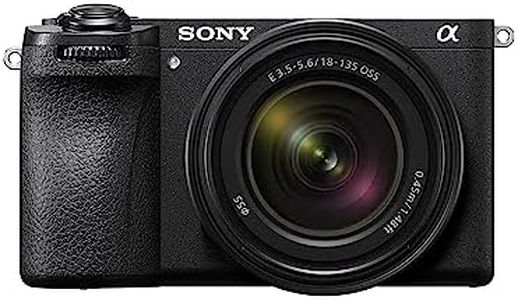
Sony Alpha 6700 APS-C Mirrorless Camera with 18-135mm Lens (26MP, AI-Powered Autofocus, 4K 120p Video, 5-Axis Image Stabilization, Vari-Angle Touchscreen – Hybrid Camera for Photo & Video Creators)

Rating
10.0
Chosen by1,466
Sensor Size
Lens Options
Size and Weight
Sensor Size
Delivers stunning image quality with impressive detail, dynamic range, and colour accuracy, even in low light.
Lens Options
The extensive lens selection for Sony E-mount eases the transition from full-frame to APS-C sensors without compromising versatility.
Size and Weight
Compact, lightweight body with a comfortable grip and intuitive controls makes it a joy to use in various shooting situations.
Video Capabilities
Shoots 4K video at 60fps and even 120fps with a crop, with 10-bit 4:2:2 internal recording that enhances creative post-production.

The Sony Alpha 6700 is a solid choice for beginners stepping into mirrorless cameras. It features a large APS-C sensor with 26 megapixels, which helps capture clear and detailed photos, even in low light. The included Sony 18-135mm lens covers a good zoom range, giving versatile shooting options from wide-angle to telephoto, which is great for learning different photography styles without needing extra lenses right away.

The camera supports manual controls, letting you experiment with settings as you get more comfortable, but also offers helpful AI-powered autofocus to keep your subjects sharp effortlessly. It’s compact and lightweight at just 0.82 kg, making it easy to carry on trips or daily outings. For video, it’s impressive: you can shoot in high-quality 4K with advanced features like slow motion and image stabilization, which beginners will appreciate when creating smooth footage. The touchscreen and electronic viewfinder add convenience for framing your shots.

Some specs like the maximum aperture range (f/3.5–f/5.6) might limit creativity in very low light compared to faster lenses, and the digital image stabilization is less effective than optical stabilization. Also, the camera and lens kit is priced toward serious beginners or enthusiasts, which might be a bit much for absolute novices on a tight budget. If you want a camera that grows with your skills, offers great photo and video quality, and is easy to use yet powerful, the Sony Alpha 6700 is a very capable option.

Rating
10.0
Chosen by1,466
Sensor Size
Lens Options
Size and Weight
Sensor Size
Delivers stunning image quality with impressive detail, dynamic range, and colour accuracy, even in low light.
Lens Options
The extensive lens selection for Sony E-mount eases the transition from full-frame to APS-C sensors without compromising versatility.
Size and Weight
Compact, lightweight body with a comfortable grip and intuitive controls makes it a joy to use in various shooting situations.
Video Capabilities
Shoots 4K video at 60fps and even 120fps with a crop, with 10-bit 4:2:2 internal recording that enhances creative post-production.
#2

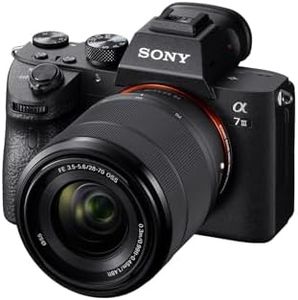
Sony Alpha 7 III Full-Frame Mirrorless Camera with 28-70mm Lens (24.2MP, 4K Video, Fast 0.02s 693 Point Hybrid AF & 5 Axis stabilisation - Ideal for Enthusiasts, Hybrid Shooter and Low Light imaging)

Rating
8.8
Lens Options
Size and Weight
Video Capabilities
Lens Options
The 28-70mm kit lens is decent for starters, but the real magic happens when paired with better glass.
Size and Weight
While the A7 III is consumer-oriented and cheaper than higher-end models, it still provides portability, durability, and reliability.
Video Capabilities
The camera operates well at high ISO and in low light, with excellent autofocus being a real strong point.

The Sony Alpha 7 III is a feature-rich full-frame mirrorless camera that could be appealing to beginners moving into more advanced photography. It boasts a 24 MP sensor, providing high-quality images, especially in low-light conditions due to its impressive ISO range of 100-51200. The camera comes with a versatile Sony 28-70mm f/3.5-5.6 zoom lens, which is great for everyday use and helps beginners explore different focal lengths.

While the camera supports manual controls, which are crucial for learning and creativity, its advanced features like Real-Time tracking and Eye AF simplify autofocus, making it easier for novice photographers to get sharp images consistently. Additionally, the 5-axis in-body optical image stabilization is beneficial for steady shots, reducing blur due to camera shake. Video enthusiasts will find its 4K HDR movie recording capability appealing, offering professional videomaking options without pixel binning.

The camera is relatively compact and lightweight, weighing 0.65 kg, making it portable for daily activities, though it might feel bulky to some beginners used to smaller cameras. While the product ranks well in mirrorless camera sales and has favorable customer reviews, a downside is its model year of 2018, which could mean missing out on newer technological advancements. Furthermore, beginners should be aware that its full-frame format may require an investment in compatible lenses for specific photography needs. This camera fits well with advanced users, but beginners who are eager to learn and grow with a powerful tool will also benefit, provided they are prepared for the learning curve associated with complex features.

Rating
8.8
Lens Options
Size and Weight
Video Capabilities
Lens Options
The 28-70mm kit lens is decent for starters, but the real magic happens when paired with better glass.
Size and Weight
While the A7 III is consumer-oriented and cheaper than higher-end models, it still provides portability, durability, and reliability.
Video Capabilities
The camera operates well at high ISO and in low light, with excellent autofocus being a real strong point.
#3

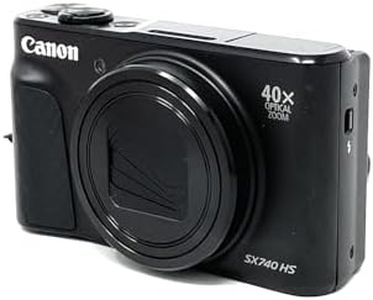
Canon SX740 HS PowerShot - Black

Rating
8.5
Lens Options
Manual Controls
Size and Weight
Lens Options
The 40X optical zoom delivers astounding reach, capturing distant subjects with remarkable clarity and color richness when stabilized properly.
Manual Controls
Automatic settings are intuitive and effective, yet it offers enough manual controls for beginners eager to learn photography basics.
Size and Weight
Compact and lightweight design makes it easy to carry everywhere, fitting comfortably in a pocket without compromising on advanced features.
Video Capabilities
4K video recording and smooth shooting up to 10 frames per second enable capturing fast action with clarity and fluidity.

The Canon SX740 HS PowerShot is a solid choice for beginners looking for a compact and versatile camera. It features a 20.3-megapixel CMOS sensor, which is good enough for capturing detailed photos without overwhelming new users. The powerful 40X optical zoom lens allows you to shoot everything from wide landscapes to distant wildlife, making it very flexible for various shooting situations. Although the camera focuses mainly on automatic settings, it does offer some manual aperture control, which is a nice bonus for beginners wanting to learn more about photography. Its compact size and lightweight design make it easy to carry around, plus the 3-inch flip-up screen is perfect for selfies and shooting from tricky angles. Video-wise, it stands out with 4K recording and steady shooting up to 10 frames per second, great for capturing smooth action and memories.

On the downside, it lacks advanced manual controls that more experienced users might want, and it is not water-resistant, so extra care is needed outdoors. The camera also uses a single memory card slot and standard JPEG format, which keeps things simple but limits some professional options. With built-in Wi-Fi and Bluetooth connectivity, sharing photos with friends and family is easy. The Canon SX740 HS balances ease of use and powerful zoom performance, making it an excellent beginner camera for those who want to explore photography without complexity.

Rating
8.5
Lens Options
Manual Controls
Size and Weight
Lens Options
The 40X optical zoom delivers astounding reach, capturing distant subjects with remarkable clarity and color richness when stabilized properly.
Manual Controls
Automatic settings are intuitive and effective, yet it offers enough manual controls for beginners eager to learn photography basics.
Size and Weight
Compact and lightweight design makes it easy to carry everywhere, fitting comfortably in a pocket without compromising on advanced features.
Video Capabilities
4K video recording and smooth shooting up to 10 frames per second enable capturing fast action with clarity and fluidity.

Buying Guide for the Best Beginner Cameras

Choosing a beginner camera can be an exciting journey into the world of photography. The right camera will help you capture beautiful moments and develop your skills. When selecting a camera, consider what you want to photograph, whether it's landscapes, portraits, or action shots. Think about how portable you need the camera to be and how much control you want over the settings. Understanding the key specifications will help you make an informed decision that aligns with your photography goals.
Sensor SizeThe sensor size in a camera is crucial because it affects the quality of the images you capture. Larger sensors generally produce better image quality, especially in low light, and offer more depth of field control. Common sensor sizes include full-frame, APS-C, and Micro Four Thirds. Full-frame sensors are larger and provide superior image quality, but they are often found in more expensive and bulkier cameras. APS-C sensors are smaller but still offer excellent quality and are more common in beginner cameras. Micro Four Thirds sensors are even smaller, making the cameras more compact and lightweight, which is great for travel. If you're just starting, an APS-C sensor is a good balance between quality and size.
MegapixelsMegapixels refer to the resolution of the camera's sensor, indicating how many millions of pixels the sensor can capture. More megapixels mean you can print larger photos without losing detail, but they don't necessarily mean better image quality. For most beginners, a camera with 16 to 24 megapixels is more than sufficient. This range allows for high-quality prints and cropping flexibility without overwhelming file sizes. Consider your needs: if you plan to print large photos or crop heavily, aim for the higher end of this range.
Lens OptionsThe ability to change lenses is a significant advantage of many cameras, allowing you to adapt to different photography styles and conditions. Some cameras come with a fixed lens, which can be limiting but also simplifies the learning process. Interchangeable lens cameras, like DSLRs and mirrorless models, offer more flexibility and growth potential. If you want to explore various types of photography, such as macro or telephoto, consider a camera with interchangeable lenses. For those who prefer simplicity, a high-quality fixed lens camera might be the best choice.
Manual ControlsManual controls allow you to adjust settings like shutter speed, aperture, and ISO, giving you more creative control over your photos. Cameras with full manual controls are ideal for learning photography fundamentals and experimenting with different techniques. However, they can be overwhelming for complete beginners. Many beginner cameras offer a mix of automatic and manual modes, which is perfect for gradually learning how to use these settings. If you're eager to learn and experiment, look for a camera with comprehensive manual controls.
Size and WeightThe size and weight of a camera can significantly impact your shooting experience, especially if you plan to carry it around frequently. Smaller, lighter cameras are more portable and less cumbersome, making them ideal for travel and everyday use. However, they might have fewer features or smaller sensors. Larger cameras often offer better ergonomics and more advanced features but can be heavy and bulky. Consider how you plan to use the camera: if portability is a priority, opt for a compact model. If you don't mind the extra weight for better performance, a larger camera might be suitable.
Video CapabilitiesMany beginner cameras also offer video recording capabilities, which can be a great addition if you're interested in capturing moving images. Look for features like resolution (Full HD or 4K), frame rates, and autofocus performance during video recording. Full HD is sufficient for most casual video needs, but 4K offers higher quality and future-proofs your investment. If video is a significant interest, ensure the camera has good video autofocus and stabilization features. Decide based on how much you plan to use the camera for video versus still photography.