10 Best Backpacking Sleeping Bags
From leading brands and best sellers available on the web.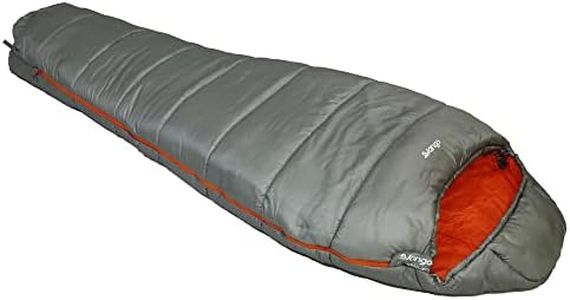
Related Products
Recommended lists


Our Top Picks
Winner
Vango Nitestar Alpha 350 Sleeping Bag - Duke of Edinburgh Recommended | Ultralight Mummy Sleeping Bag for Camping, Hiking, Outdoor, Backpacking (Nitestar Alpha 350 (Fog))
The Vango Nitestar Alpha 350 Sleeping Bag is a solid choice for those venturing into 3-4 season backpacking trips, as indicated by its temperature rating. Its mummy shape is designed to enhance thermal efficiency by fitting snugly around the body, which could be very beneficial for retaining heat in cooler conditions. The sleeping bag features Alpha Insulation, which typically offers a good balance between warmth and weight, making it suitable for extended outdoor adventures.
Weighing in at 2 kg, the bag is relatively lightweight—important for backpackers who need to minimize pack weight. However, it may not be the lightest option available for those ultra-light enthusiasts. Packability is bolstered by its mummy shape and included Fastpack carry bag, which should make it easier to stuff and transport. The POLAIR HEX SHELL material is durable and breathable, adding a layer of reliability and comfort, while the POLAIR Lining ensures a soft feel against the skin, enhancing overnight comfort. There is a handy internal pocket for keeping small personal items close by, although the single size and maximum height recommendation of 182.88 cm might limit its suitability for taller individuals.
Vango's inclusion of a 3D hood with a drawcord closure helps prevent heat loss from the head, a feature that could be appreciated during chilly nights. Although the color options are various, the design may not appeal to everyone's aesthetic preferences. The sleeping bag is recommended by the Duke of Edinburgh award, which adds to its credibility as a reliable piece of gear for adventurous trips. For those embarking on backpacking expeditions within the specified temperature range, this sleeping bag presents a good blend of comfort, durability, and functionality, even if it's not the most compact or lightweight option on the market.
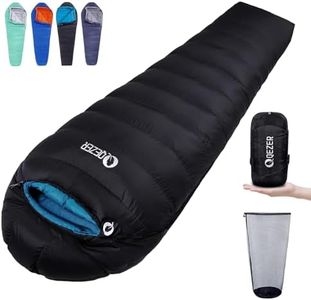
QEZER Down Sleeping Bag 4 Season, Lightweight Winter Sleeping Bag 0 Degree to -12 Degree C for Adults and Kid Camping, Hiking and Backpacking Outdoor Filled 600+FP Down (Black)
The QEZER Down Sleeping Bag is a versatile option for backpackers and campers, designed for four-season use. It stands out with its 620 fill power (FP) duck down insulation, which offers excellent warmth, comfort, and an impressive temperature rating down to -12°C. This makes it a reliable choice for chilly nights. The mummy shape is effective in retaining heat, and the spacious footbox ensures that you won't feel cramped.
With a weight of 1.69 kg and a compressed size of 39 cm x 20 cm, it is relatively lightweight and compact, making it convenient to carry on outdoor adventures. The durable 400T 20D nylon fabric provides good water and wind resistance, adding to its durability for various camping conditions.
However, the sleeping bag may be a bit snug for taller individuals over 190 cm and might not be the best fit for warmer summer nights due to its high insulation. Additionally, while it comes with a compressible bag, some users might find the compressed size slightly larger compared to ultra-compact models. If you often camp in colder climates and need a reliable, warm sleeping bag, the QEZER Down Sleeping Bag is a strong contender.
Rab Solar Eco 3 Sleeping Bag
The Rab Solar Eco 3 is a mummy-shaped sleeping bag designed for backpackers seeking a reliable all-season option. It weighs about 1.47 kg, which is moderate—not the lightest, but still manageable for many hikers. Its mummy shape helps retain warmth efficiently, making it suitable for cooler conditions.
The comfort temperature rating means it is designed to keep an average adult warm in a variety of weather, though it might not be ideal for very cold winter nights. Rab typically uses quality materials, and the eco-friendly design reflects sustainable practices. Packability is reasonable given its size (around 53 x 25 x 23 cm packed), though it is not the smallest or lightest bag on the market, so it may occupy more space in your backpack compared to ultralight models.
The right-side zipper allows for easy entry and exit, which is a helpful feature. This sleeping bag is well-suited for adults looking for a dependable, all-around sleeping solution that balances comfort, durability, and eco-consciousness. Those prioritizing ultra-lightweight or extreme cold-weather gear might consider lighter or warmer alternatives.