We Use CookiesWe use cookies to enhance the security, performance, functionality and for analytical and promotional activities. By continuing to browse this site you are agreeing to our privacy policy

10 Best Astronomical Binocular

From leading brands and best sellers available on the web.
By clicking on a link to a third party's website, log data is shared with that third party.

Our Top Picks

#1

Winner

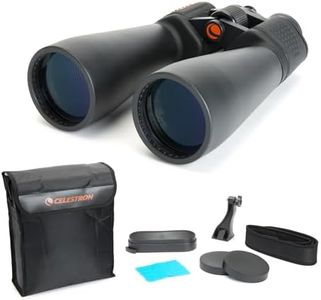
Celestron 71018 SkyMaster 20x80mm Porro Prism Binoculars with Multi-Coated Lens, BaK-4 Prism Glass and Carry Case, Black

Rating
10.0
Chosen by1,445
Magnification
Objective Lens Diameter
Field of View
Magnification
At 20x magnification, a tripod is essential to prevent image shake and to maintain steady focus; handheld use at this power level is impractical.
Objective Lens Diameter
The large 80mm lenses deliver beautifully clear and bright images that reveal many stars invisible to the naked eye, cutting through urban haze on clear nights.
Field of View
The field of view is narrow, which suits detailed deep-sky observations but is less ideal for wide panoramic sky scanning or casual stargazing without a tripod.
Weight and Ergonomics
These binoculars have a robust, well-made feel and are expected to last for years with proper care, making them a great long-term investment for astronomy enthusiasts.

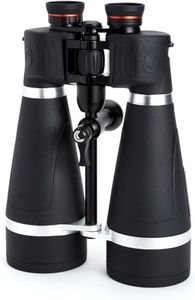
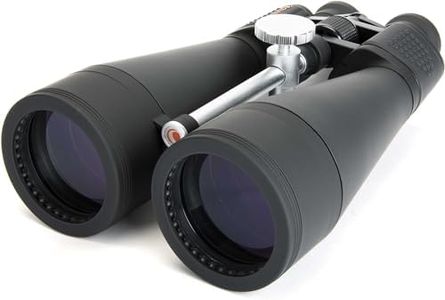
The Celestron SkyMaster 20x80 binoculars are designed primarily for astronomy and long-distance viewing, offering strong 20x magnification paired with large 80mm objective lenses. These help gather a lot of light, making dim stars and celestial objects easier to see. The BaK-4 prisms and multi-coated optics contribute to producing bright and sharp images, which is important when stargazing in low light conditions.

Due to their size and weight (over 2 kg), they work best when mounted on a tripod, which is supported by a built-in adapter. This setup reduces hand strain and image shake, improving the viewing experience. The binoculars are built with a rubber-armored, water-resistant body that can handle outdoor use and some weather exposure, which is handy if you like to observe in different environments. They do not have image stabilization, so without a tripod, it can be challenging to keep the image steady at high magnification.

The field of view is fairly narrow, typical for this magnification level, meaning you’ll see a smaller area of the sky at once, which is common in astronomy binoculars focusing on detail rather than wide panoramas. The weight and bulkiness may make them less suitable for casual or handheld use, but they are appreciated by serious enthusiasts who want an affordable, powerful option for deep-sky observations. These binoculars are a solid choice for those who want to explore astronomy with a robust and bright optical system but are prepared to use a tripod to get the best results.

Rating
10.0
Chosen by1,445
Magnification
Objective Lens Diameter
Field of View
Magnification
At 20x magnification, a tripod is essential to prevent image shake and to maintain steady focus; handheld use at this power level is impractical.
Objective Lens Diameter
The large 80mm lenses deliver beautifully clear and bright images that reveal many stars invisible to the naked eye, cutting through urban haze on clear nights.
Field of View
The field of view is narrow, which suits detailed deep-sky observations but is less ideal for wide panoramic sky scanning or casual stargazing without a tripod.
Weight and Ergonomics
These binoculars have a robust, well-made feel and are expected to last for years with proper care, making them a great long-term investment for astronomy enthusiasts.
#2

Celestron 71332 Nature DX 8x42mm Binoculars with Multi-Coated Lens, BaK-4 Prism Glass and Carry Case, Green

Rating
9.4
Weight and Ergonomics
Lightweight and comfortable for prolonged use, with easy adjustments for eyeglass wearers.

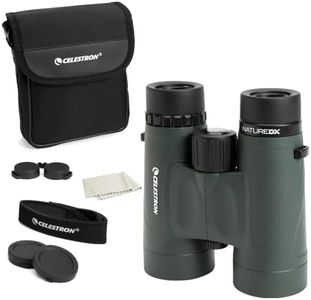
The Celestron 71332 Nature DX 8x42mm Binoculars are a solid choice for beginners and mid-range outdoor enthusiasts, including those interested in bird watching and general nature observation. With an 8x magnification and a 42mm objective lens diameter, these binoculars offer a good balance between magnification power and light-gathering capability, suitable for various viewing conditions.

The fully multi-coated lenses and BaK-4 prism glass ensure bright, clear images with high contrast and resolution, making them effective for astronomical use as well, though they may not provide the very high magnification typically sought for detailed star gazing. The close focus distance of 6.5 feet is excellent for observing closer subjects in great detail. The binoculars are robustly built with waterproof and fogproof features, adding durability for outdoor use. The rubber-armored polycarbonate housing enhances grip and protection against drops or bumps.

Ergonomically, they are comfortable to use, with twist-up eyecups that are suitable for both eyeglass wearers and non-eyeglass wearers. However, at 1.75 pounds, they may be slightly heavy for prolonged hand-held use, and users might prefer a tripod mount for extended observation sessions. Included accessories like the carrying case, neck strap, and lens caps add convenience. The product is backed by a limited lifetime warranty, reflecting confidence in its durability and customer support. Despite not having image stabilization, these binoculars offer significant value for their price point, making them a versatile tool for various outdoor adventures.

Rating
9.4
Weight and Ergonomics
Lightweight and comfortable for prolonged use, with easy adjustments for eyeglass wearers.
#3

Celestron 71009 SkyMaster 15x70mm Porro Prism Binoculars with Multi-Coated Lens and BaK-4 Prism Glass, Black

Rating
8.5
Magnification
Objective Lens Diameter
Weight and Ergonomics
Magnification
The 15x magnification hits the 'Goldilocks zone,' providing an excellent field of view without the necessity for a larger, heavier model.
Objective Lens Diameter
The Celestron SkyMaster offers beautifully clear images with its large objective lenses, making them a fantastic choice for sky watching.
Weight and Ergonomics
Despite being somewhat heavy, these binoculars balance well when held correctly, offering a surprisingly stable viewing experience.

The Celestron 71009 SkyMaster offers impressive 15x magnification combined with large 70mm objective lenses, making it an excellent choice for stargazing and viewing distant terrestrial objects. With its BaK-4 prism glass and multi-coated optics, you can expect sharp and bright images even in low-light conditions. These binoculars are designed for high performance during long-distance observations, which is ideal for astronomical use.

One of the standout features is the large center focus knob, which allows for easy and precise adjustments across the field of view. The protective rubber covering ensures a solid grip, beneficial during extended viewing sessions. The binoculars are fog-proof and water-resistant, adding a layer of durability for varied outdoor conditions.

However, weighing 1.49 kg, they might be somewhat heavy for prolonged handheld use, but the included tripod adapter can alleviate this issue by offering stable support during long periods of observation. The lack of image stabilization might make it challenging to maintain a steady view without a tripod. While they are marketed for bird watching, their real strength lies in astronomical and long-distance terrestrial viewing.

Ergonomically, the binoculars come with a carry case and additional accessories for safe transport and storage. Though water-resistant, it is advisable to use caution in very wet environments. These binoculars have been well-received, with positive customer reviews reflecting satisfaction with their optical quality and handling.

The Celestron SkyMaster is highly suitable for adults with a keen interest in astronomy, offering good value for those seeking enhanced viewing experiences at night or over long distances.

Rating
8.5
Magnification
Objective Lens Diameter
Weight and Ergonomics
Magnification
The 15x magnification hits the 'Goldilocks zone,' providing an excellent field of view without the necessity for a larger, heavier model.
Objective Lens Diameter
The Celestron SkyMaster offers beautifully clear images with its large objective lenses, making them a fantastic choice for sky watching.
Weight and Ergonomics
Despite being somewhat heavy, these binoculars balance well when held correctly, offering a surprisingly stable viewing experience.

Buying Guide for the Best Astronomical Binocular

Choosing the right astronomical binoculars can greatly enhance your stargazing experience. Unlike telescopes, binoculars are more portable, easier to use, and provide a wider field of view, making them ideal for beginners and casual observers. When selecting binoculars for astronomy, it's important to consider several key specifications to ensure you get the best fit for your needs. Understanding these specs will help you make an informed decision and enjoy the night sky to its fullest.
MagnificationMagnification refers to how much closer the binoculars can make objects appear. For astronomical binoculars, a magnification of 7x to 10x is generally recommended. Higher magnifications, such as 15x or 20x, can provide more detailed views of celestial objects but may require a tripod to stabilize the image. If you are a beginner or prefer handheld use, stick to lower magnifications to avoid shaky images.
Objective Lens DiameterThe objective lens diameter, measured in millimeters, determines how much light the binoculars can gather. This is crucial for astronomy, as more light allows you to see fainter objects. Binoculars with objective lenses of 50mm or larger are ideal for stargazing. For example, 10x50 binoculars have a 50mm objective lens, which is a good balance between light-gathering ability and portability. If you plan to observe in very dark skies, larger diameters like 70mm or 80mm can provide even better views.
Field of ViewThe field of view indicates the width of the area you can see through the binoculars, usually measured in degrees or feet at a specific distance. A wider field of view is beneficial for astronomy because it makes it easier to locate and track celestial objects. Binoculars with a field of view of 5 to 7 degrees are generally suitable for stargazing. If you enjoy scanning large areas of the sky or observing star clusters, prioritize a wider field of view.
Exit PupilThe exit pupil is the diameter of the beam of light that exits the eyepiece, calculated by dividing the objective lens diameter by the magnification. For example, 10x50 binoculars have an exit pupil of 5mm. A larger exit pupil is better for low-light conditions, such as nighttime astronomy, because it matches the dilation of your eyes in the dark. Aim for an exit pupil of at least 5mm for comfortable stargazing.
Prism TypeBinoculars use prisms to correct the orientation of the image. The two main types are Porro prisms and roof prisms. Porro prism binoculars are generally preferred for astronomy because they offer better depth perception and a wider field of view. They are also typically more affordable. Roof prism binoculars are more compact and durable but can be more expensive. Choose Porro prisms if you prioritize image quality and field of view for stargazing.
CoatingsLens coatings improve light transmission and reduce reflections, resulting in brighter and clearer images. Fully multi-coated lenses are the best option for astronomical binoculars, as they provide the highest light transmission. If you are serious about stargazing, look for binoculars with fully multi-coated optics to ensure the best possible views of the night sky.
Weight and ErgonomicsThe weight and ergonomics of binoculars affect how comfortable they are to use, especially for extended periods. Heavier binoculars can be tiring to hold, so consider models with a weight that you can manage comfortably. Additionally, look for features like adjustable eyecups, a comfortable grip, and a well-balanced design. If you plan to use high-magnification binoculars, consider getting a tripod adapter to reduce strain and improve stability.