We Use CookiesWe use cookies to enhance the security, performance, functionality and for analytical and promotional activities. By continuing to browse this site you are agreeing to our privacy policy

10 Best 88 Key Weighted Keyboards

From leading brands and best sellers available on the web.
By clicking on a link to a third party's website, log data is shared with that third party.

Our Top Picks

#1

Winner

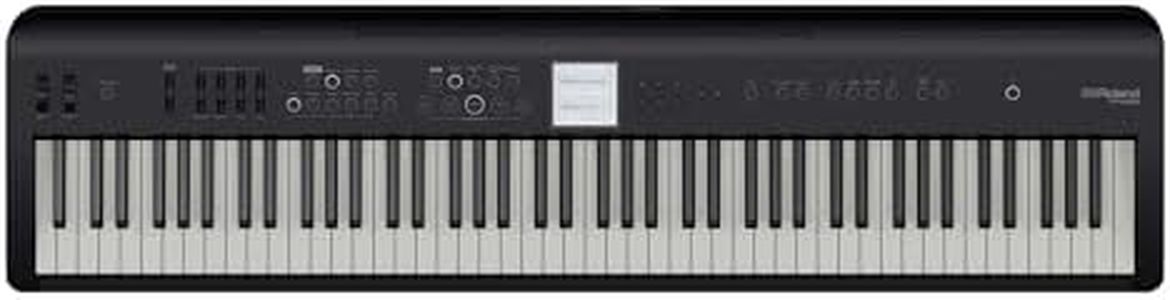
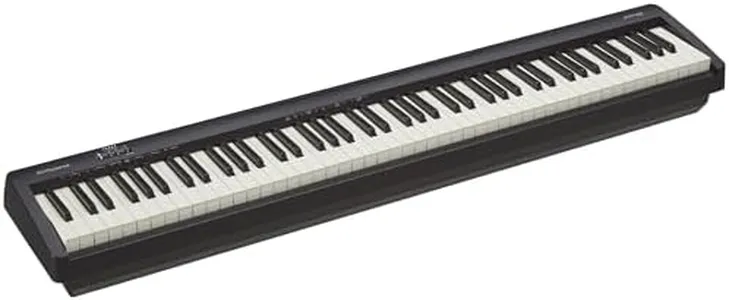
Roland FP-E50 Digital Piano | Premium Piano with Expandable Sound Library | 88-Note Hammer-Action Keyboard | Professional Auto-Accompaniment | Mic Input with Vocal Harmony FX | Bluetooth/MIDI Support

Rating
10.0
Chosen by1,500
Key Weighting
Sound Quality
Built-in Features
Key Weighting
The keyboard action delivers a truly authentic piano feel with graded hammer action and an ivory-textured surface, providing exceptional expressiveness and dynamic control.
Sound Quality
The sound engine produces rich, natural tones that surpass expectations for the price, making it suitable for beginners and serious players alike.
Built-in Features
Bluetooth MIDI connectivity and companion apps greatly expand sound options and control, allowing access to a wide range of instruments and advanced layering features beyond the basic interface.
Portability
Portability is reasonable for an 88-key weighted keyboard, though some caution that the weight may be noticeable when transporting frequently.

The Roland FP-E50 is a high-quality digital piano tailored for professional players and serious enthusiasts looking for an authentic piano experience. It features an 88-note PHA-4 Standard hammer-action keyboard, which offers realistic key weighting and touch sensitivity that closely mimics an acoustic grand piano. The SuperNATURAL Piano sound engine produces rich, expressive tones, ensuring excellent sound quality that stands out in this category. Polyphony is robust enough to handle complex performances without note cutoffs, enhancing musical expression.

What sets the FP-E50 apart is its expansive ZEN-Core sound library with over 1000 sounds, including synthesizers and orchestral instruments, making it versatile for various music styles beyond classical piano. Built-in features like professional auto-accompaniment styles, mic input with vocal harmony effects, and Bluetooth MIDI support add to its creative and performance capabilities. The Roland Piano App allows easy control of settings from a smartphone, streamlining user interaction.

In terms of portability, the FP-E50 weighs 23 kg (about 50 pounds), which is reasonable for an 88-key weighted keyboard but may be less convenient for frequent transport compared to lighter models. The instrument runs on batteries, adding some flexibility for playing without needing a power outlet. Bluetooth audio output for headphones is not supported, which might be a drawback for those who prefer wireless listening. While loaded with features, this piano is best suited for players who will take advantage of its broad sound library and professional functions; beginners might find it complex. The Roland FP-E50 offers a premium piano feel with excellent sound and touch, packed with creative features that make it a strong choice for advanced pianists and performers seeking versatility and professional-level quality.

Rating
10.0
Chosen by1,500
Key Weighting
Sound Quality
Built-in Features
Key Weighting
The keyboard action delivers a truly authentic piano feel with graded hammer action and an ivory-textured surface, providing exceptional expressiveness and dynamic control.
Sound Quality
The sound engine produces rich, natural tones that surpass expectations for the price, making it suitable for beginners and serious players alike.
Built-in Features
Bluetooth MIDI connectivity and companion apps greatly expand sound options and control, allowing access to a wide range of instruments and advanced layering features beyond the basic interface.
Portability
Portability is reasonable for an 88-key weighted keyboard, though some caution that the weight may be noticeable when transporting frequently.
#2

Roland FP-10, Compact 88-Note Digital Piano, SuperNATURAL Piano Tones, Authentic Acoustic Feel Keyboard, Great for Beginners & Experienced Players, Bluetooth & MIDI Connectivity - Black

Rating
9.1
Key Weighting
Sound Quality
Built-in Features
Key Weighting
The Roland FP-10 offers an unbeatable key action for its price, delivering a feel akin to more expensive, high-quality pianos.
Sound Quality
The FP-10's sound quality is impressive, with built-in speakers that deliver rich tones, though headphone output might require an upgrade for better volume.
Built-in Features
Its Bluetooth connectivity enhances functionality, offering access to more sounds and settings through the Roland app.
Portability
With the FP-10, you get a compact digital piano that plays like a baby grand without the need for space or maintenance.

The Roland FP-10 is a compact 88-note digital piano that offers promising features for beginners and students. Its key weighting and touch sensitivity mimic a real acoustic piano, providing an authentic playing experience that helps develop proper piano techniques. This makes it an ideal choice for home use and learning environments. The SuperNATURAL sound engine delivers rich, expressive tones that enhance the playing experience, while powerful onboard speakers ensure your music sounds good even without external amplification.

The FP-10's inclusion of headphone outputs and quiet keyboard action is perfect for practicing without disturbing others, a valuable feature for those in shared living spaces. Built-in Bluetooth MIDI and USB connectivity allow seamless integration with educational apps and software, enhancing learning opportunities. Roland's Piano Partner 2 app further simplifies control over the piano's features directly from your smartphone.

However, the FP-10 is slightly heavier at 12.25 kg, which might affect portability for users who need to move it frequently. Despite this, it's relatively compact and can fit well in most home setups. The absence of advanced built-in features like recording or a wide variety of instrument voices may be a limitation for those looking for more comprehensive digital piano capabilities. The optional matching stand can add a classic look, but it means an additional purchase. The Roland FP-10 stands out for its realistic acoustic feel and sound quality, making it an excellent entry-level choice for beginners and those focusing on skill development at home.

Rating
9.1
Key Weighting
Sound Quality
Built-in Features
Key Weighting
The Roland FP-10 offers an unbeatable key action for its price, delivering a feel akin to more expensive, high-quality pianos.
Sound Quality
The FP-10's sound quality is impressive, with built-in speakers that deliver rich tones, though headphone output might require an upgrade for better volume.
Built-in Features
Its Bluetooth connectivity enhances functionality, offering access to more sounds and settings through the Roland app.
Portability
With the FP-10, you get a compact digital piano that plays like a baby grand without the need for space or maintenance.
#3

Yamaha P-145 Digital Piano with 88 Graded Hammer Compact Keys and 10 Instrumental Voices, Lightweight and Portable, Black

Rating
8.8
Key Weighting
Sound Quality
Built-in Features
Key Weighting
The Yamaha P-145 offers an incredible digital piano experience, with playability that rivals non-weighted keyboards thanks to its graded hammer action keys.
Sound Quality
Sound quality is top-notch, delivering grand bass notes and delicate trebles that provide a rich and dynamic playing experience.
Built-in Features
The instrument's versatility is enhanced by features like the sustain pedal and headphone jack, which are perfect for private practice.
Portability
The piano's portability is a significant advantage, making it suitable for performances despite its weight, although a solid stand is recommended.

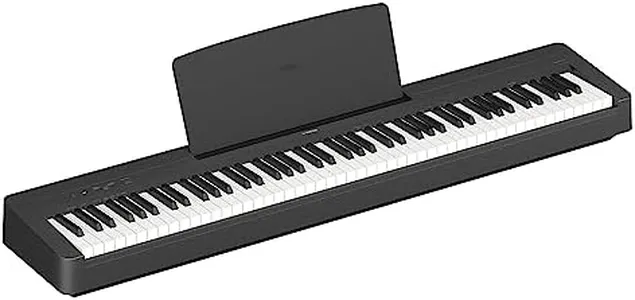
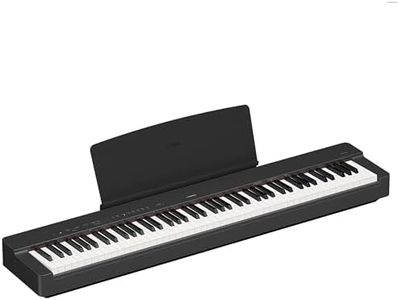
The Yamaha P-145 Digital Piano is an excellent choice for beginners and those needing a portable option without compromising on quality. The 88 graded hammer compact keys are designed to simulate the feel of a real grand piano, which is a significant strength for those learning to play the piano. This feature ensures realistic touch sensitivity, enhancing the practice experience.

The piano offers 10 instrumental voices, which is sufficient for basic practice but might be limiting for more advanced musicians seeking a wider variety of sounds. Additionally, with a 12.3 kg weight and compact dimensions, it is easy to transport, making it ideal for users with limited space or those frequently on the move. The sound quality is impressive, providing clarity and volume that meets the needs of both casual practice and performance settings.

Built-in features such as the metronome function, sustain pedal, and compatibility with apps like Rec'n'Share and Smart Pianist add valuable tools for learning and recording. The combination of practical design, quality sound, and portability makes the Yamaha P-145 a strong contender in its category, primarily benefiting beginners and intermediate players seeking a convenient yet quality instrument.

Rating
8.8
Key Weighting
Sound Quality
Built-in Features
Key Weighting
The Yamaha P-145 offers an incredible digital piano experience, with playability that rivals non-weighted keyboards thanks to its graded hammer action keys.
Sound Quality
Sound quality is top-notch, delivering grand bass notes and delicate trebles that provide a rich and dynamic playing experience.
Built-in Features
The instrument's versatility is enhanced by features like the sustain pedal and headphone jack, which are perfect for private practice.
Portability
The piano's portability is a significant advantage, making it suitable for performances despite its weight, although a solid stand is recommended.

Buying Guide for the Best 88 Key Weighted Keyboards

Choosing the right 88-key weighted keyboard can be a rewarding experience, especially if you know what to look for. These keyboards are designed to mimic the feel of an acoustic piano, making them a great choice for both beginners and experienced players. When selecting a keyboard, consider the key specifications that will impact your playing experience and match your personal needs and preferences. Here are some key specs to consider and how to navigate them to find the best fit for you.
Key WeightingKey weighting refers to the resistance you feel when pressing the keys, which is designed to replicate the feel of an acoustic piano. This is important because it helps develop finger strength and technique. Key weighting can be categorized into three main types: light, semi-weighted, and fully weighted (hammer action). Light weighting is easier to press and may be suitable for beginners or those who prefer a lighter touch. Semi-weighted keys offer a balance between light and fully weighted, providing some resistance without being too heavy. Fully weighted keys, also known as hammer action, closely mimic the feel of an acoustic piano and are ideal for serious pianists or those looking to build proper technique.
Touch SensitivityTouch sensitivity, or velocity sensitivity, means that the volume and tone of the sound produced changes based on how hard or soft you press the keys. This is important for expressive playing, as it allows for dynamic control over the music. Touch sensitivity can be adjusted on many keyboards, with settings ranging from light to heavy. If you are a beginner, you might prefer a lighter touch sensitivity to make playing easier. More advanced players might opt for a heavier setting to better control the dynamics of their performance.
PolyphonyPolyphony refers to the number of individual notes a keyboard can produce at the same time. This is important for playing complex pieces, using the sustain pedal, or layering sounds. Polyphony can range from 32 notes to 256 notes or more. For beginners, a lower polyphony count (32-64 notes) might be sufficient. Intermediate players might look for 64-128 notes, while advanced players or those using the keyboard for professional purposes should consider 128 notes or higher to ensure no notes are cut off during complex passages.
Sound QualitySound quality is determined by the samples and sound engine used in the keyboard. High-quality samples and advanced sound engines produce more realistic and expressive sounds. This is important for an authentic playing experience and for performances. When evaluating sound quality, listen to the piano tones and other instrument sounds the keyboard offers. Consider whether the sounds are rich and detailed, and if they inspire you to play. Higher-end models typically offer better sound quality, but even mid-range keyboards can provide excellent sound for most players.
Built-in FeaturesBuilt-in features can enhance your playing experience and provide additional functionality. Common features include metronomes, recording capabilities, lesson modes, and connectivity options like USB or MIDI. These features are important for practice, performance, and integrating with other music equipment. Beginners might benefit from lesson modes and metronomes to aid in learning, while more advanced players might look for recording capabilities and connectivity options to expand their musical possibilities.
PortabilityPortability refers to the ease with which you can move and transport the keyboard. This is important if you plan to take your keyboard to lessons, gigs, or different practice locations. Portability is influenced by the keyboard's weight and size. Lighter and more compact keyboards are easier to transport, making them suitable for musicians on the go. However, if you plan to keep the keyboard in one place, a heavier and more robust model might offer better stability and durability.